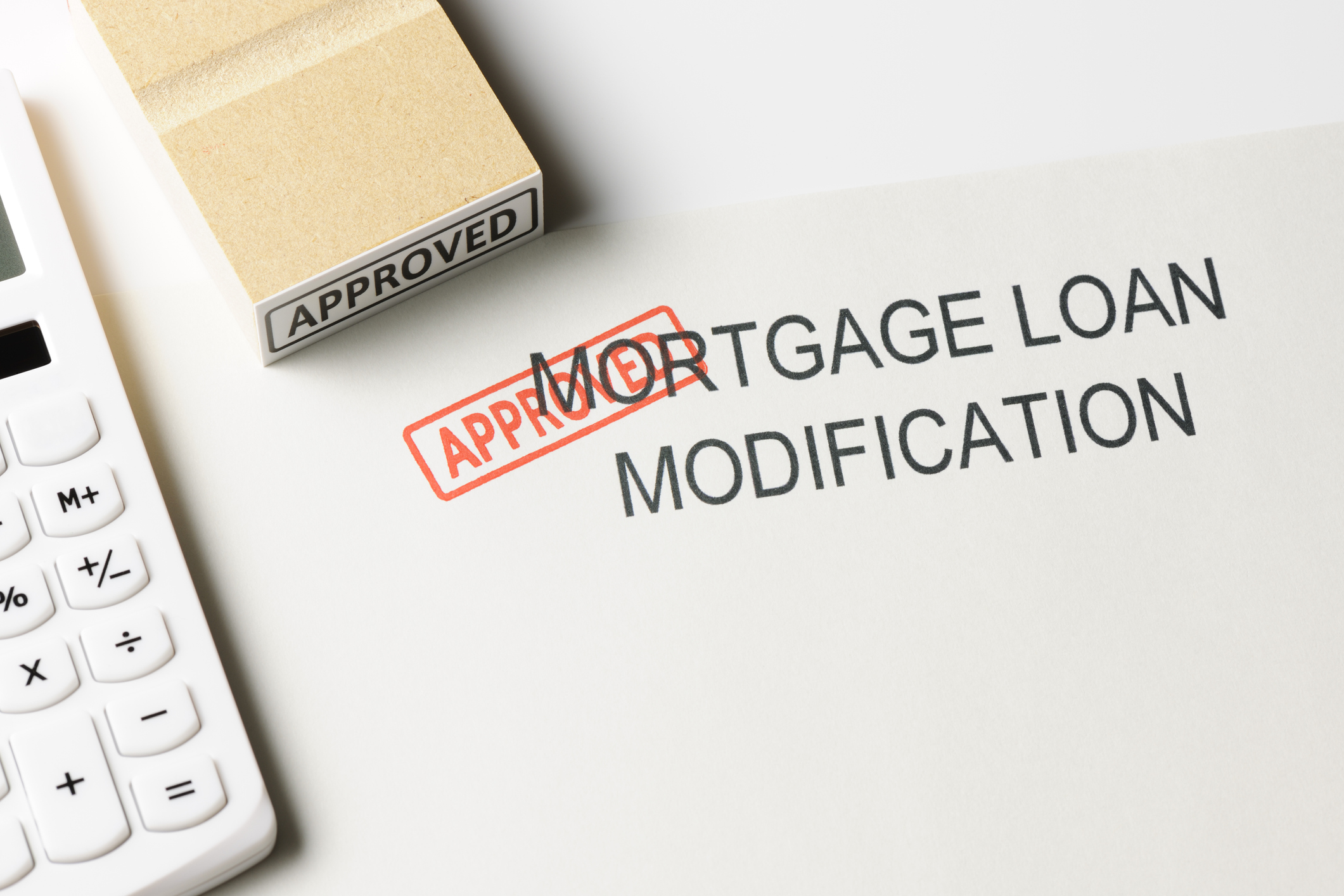
A loan modification is a change to the terms of your home loan in order to help you avoid foreclosure. This can include a change in the interest rate or the repayment schedule on your mortgage, though you usually won’t have a change in the actual balance of your mortgage.
A loan modification is different from a refinance, though both aim to make your mortgage more manageable. With a refinance, you replace your current mortgage with a new one — often with a lower interest rate or different term. Loan modifications, on the other hand, adjust the terms of your existing loan without replacing it.
If you’re struggling with payments, it’s worth comparing both options to see which offers the best long-term solution.
Lenders want to help you avoid foreclosure—when you default on your mortgage or get foreclosed on, the lender loses money. By making long-term adjustments to the terms of the loan, you can keep your house, and the lender gets their payment in full over the course of the loan — it’s a win-win.
Loan modification can take many forms. While no longer active, the government-backed Home Affordable Modification Program (HAMP) helped set standards for loan modifications. Today, most lenders offer their own private loan modification programs.
These private, or proprietary, loan modifications are done according to the lender’s own rules.
How Do Loan Modifications Work?
Loan modifications work by changing your current loan terms to ensure you can still pay your mortgage, allowing you to keep your home and your lender to continue making money.
There are a few ways that loan modifications can save you money on your monthly payments:
- Extending the repayment period. By lengthening your payment schedule, you’ll have lower monthly payments. For example, if you’re paying $1,500 a month on the mortgage principal for a 15-year mortgage, the amount you’d pay a month on the principal for a 30-year mortgage would be $750. Just keep in mind that this means you’ll also pay more on interest in the long run since interest accrues over time.
- Lower interest rates. One way your lender might lower your payment is by cutting your interest rate, giving you savings on each payment and over the life of the loan. The bank won’t make as much money, but it’s a better deal than foreclosing on your house.
- A lower principal. It’s rare, but in some cases, a lender might reduce some of your principal loan balance to lower your monthly payment. This is considered “forgiven debt,” which may need to be reported as income on your tax return. However, past federal relief laws have allowed some exceptions, especially for primary residences. Check with a tax professional to understand how it applies to your situation.
Loan Modification Requirements
While loan modification programs vary by lender, there are a few common requirements most borrowers will need to meet.
1. You have to be suffering a financial hardship
Financial hardships can happen to anyone. These include a loss of a job or reduced income, a serious illness, costly medical bills, a balloon payment due on your mortgage, a divorce, excessive debt, and more. A loss of equity or the fact that your home has lost value is not considered a qualifying financial hardship by itself.
In most cases, you have to be able to show the situation is an enduring one that is not likely to improve in the foreseeable future — for example, a salesperson who’s having a bad year will probably have a difficult time qualifying.
You also have to be without cash reserves that would enable you to continue making your mortgage payments. For example, Chase will not consider you for a loan modification if you have savings or other cash assets greater than three times your monthly mortgage payment. Retirement savings accounts that penalize early withdrawals are not included.
2. Show you cannot afford your current mortgage payments
It’s not enough to just be financially stressed. If the bank thinks you can find a way to meet your payments, they’re not going to approve you for a loan modification program. This is one reason why many lenders require you to actually be in default before they consider you for a loan modification.
Many lenders look at your debt-to-income (DTI) ratio when evaluating your ability to afford your current mortgage. A common benchmark is that your mortgage should not exceed around 31% of your gross monthly income, and your total monthly debts should stay under about 41%. That said, these are just general guidelines — each lender sets its own criteria based on your complete financial picture.
They’re also going to take a look at what kind of debt you have. If you seem to be making payments on a car you can’t afford or otherwise appear to be living beyond your means, they’ll expect you to tighten that up before they approve you for a loan modification.
3. Show you can complete a modified payment schedule
Lenders aren’t going to go to the trouble of giving you a loan modification if you’re still going to default anyway. Lenders typically require borrowers to show they have a reliable source of income to support modified payments. In many cases, this means traditional employment, but some lenders may also consider unemployment income, spousal income, or other verifiable income sources.
You’re going to have to be able to document your income, meaning pay stubs or W-2s if you’re an employee or tax returns, bank statements, or profit-and-loss statements if you’re self-employed. If you’re depending on secondary sources of income to help pay your mortgage, you’ll have to document those as well.
4. The property type matters — but you don’t always have to live there
While many lenders prioritize modifications for primary residences, you don’t always have to live in the home to qualify. Some lenders are willing to modify loans on second homes or investment properties — especially if the rental income supports the mortgage or the lender wants to avoid the cost of foreclosure.
That said, loan modifications on non-owner-occupied properties are typically harder to get and may come with stricter terms or requirements. If you’re trying to modify a loan on a property you don’t live in, be prepared to demonstrate why it’s still a sound financial decision for the lender.
Tips to Get Approved for Loan Modification
There are several reasons why a loan modification might be denied. To ensure that you’re completing the process correctly, consider the following tips to help get approval on a loan modification.
1. Include all the correct details
Make sure you’re careful when following the steps set by your lender. Read all the instructions, and collect and submit all the documents they request.
If something isn’t clear or you just don’t understand it, contact your mortgage company and ask. Improperly completed forms and missing documentation are two of the major reasons lenders cite for loan modifications being denied.
Be accurate. One common mistake people make is either misstating their income or being too optimistic in predicting earnings. The lender will investigate you thoroughly before giving final approval, and if you haven’t been upfront about your income, they’ll find out.
Ironically, you can get in trouble for both understating your income (to make your need for a loan modification seem greater) and overstating it (to make it appear you’ll be able to keep up with payments). You may be able to reapply or modify your application if your reported and actual income don’t match up, but many mortgage servicers will simply deny your application.
2. Draft a great hardship letter
Put a lot of thought and effort into drafting your hardship letter. This is where you explain why you need a loan modification and why you think it will make the difference between being able to keep your home and losing it to foreclosure.
In particular, it helps if you can show you’re committed to staying in the home. Those who can show some sort of emotional connection to the home — it’s in your hometown, your children were raised there, you purchased it with an inheritance from your parents — will often be viewed more favorably by lenders since they have a strong motivation to keep up with their new payments in order to keep the property.
3. Keep your credit rating up
Check into your credit rating. It will be a factor in whether you get approved or not. Order copies of your credit report from all three major credit agencies, Experian, Equifax, and TransUnion — you’re entitled to one free copy a year from each — and review them for errors or omissions that might be hurting your credit.
Also, do what you can to improve your credit rating or at least, prevent it from declining. Pay down major credit card debt, if possible; otherwise, avoid piling up debt if finances are tight. Pay all bills on time, including utility payments but particularly installment debt like your auto loans and credit cards. If you’re in a pinch, be aware that creditors generally won’t report you as late unless you miss a payment by a least 30 days — but try not to get in the habit of “juggling” delayed payments.
4. Preserve all correspondence
Keep copies of all your correspondence with your lender. This is one good reason to communicate by letter or email instead of by phone because you’ll have a record of everything that was said or promised in the event of a dispute.
Make sure you’re dealing with the right department at your bank — loan modifications are handled by loss mitigation, not your regular loan servicing department or collections.
5. Complete a trial run with the loan modification
Most loan modification programs, private or otherwise, will require you to complete a trial period of payments under the new terms of the loan modification. These usually run for three months.
Make sure that you successfully complete the trial period of the loan modification program — if you can’t afford to pay your mortgage under new terms, your lender will see that you can’t afford the house anyway and won’t offer you a loan modification.
Successfully completing a trial run demonstrates that you can make payments under the new terms — a critical step toward final approval. However, it does not guarantee a permanent modification. Lenders may still require additional documentation or deny approval based on other eligibility factors.
The Bottom Line
Loan modification can be a lifeline for homeowners facing financial hardship. By understanding the process, meeting the requirements, and staying organized, you can improve your chances of keeping your home. And if your financial situation allows, be sure to explore refinancing as well — it may offer even better long-term benefits.