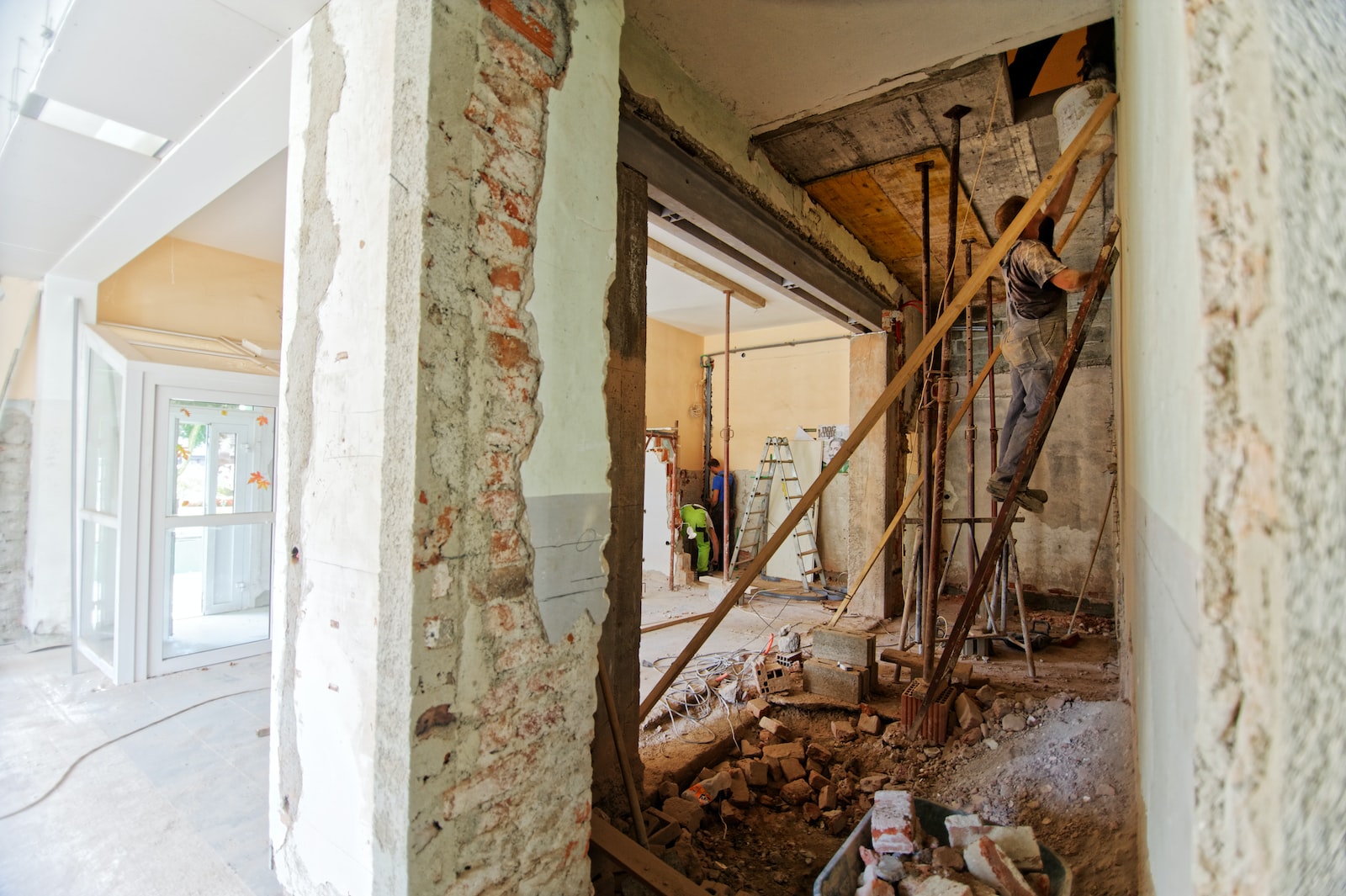
As local housing markets get tighter and tighter, buying a fixer-upper with an FHA rehab mortgage loan may be your ticket to to a home in that perfect neighborhood.
Rehab mortgages are a type of home improvement loans that can be used to purchase a property in need of work — the most common of which is the FHA 203(k) loan. These let buyers borrow enough money to not only purchase a home, but to cover the repairs and renovations a fixer-upper property might need.
Buyers can use these fixer-upper loans, backed by the Federal Housing Administration, to buy homes that need work but sit in neighborhoods that they otherwise could not afford to buy into. They can also use these loans to buy fixer-uppers in better neighborhoods where homes that don’t need as much work simply aren’t on the market.
A useful tool
“With housing inventory reaching historic lows, homebuyers are struggling to find the homes they desire,” said Patty Sullivan, director of public relations with Carrington Mortgage Holdings, LLC, in Plano, Texas. “Many buyers may not initially consider purchasing a home in need of serious repairs or improvements, but perhaps they should.”
Denise Supplee, a real estate agent in Doylestown, Pennsylvania, and co-founder of SparkRental, says that rehab loans have helped her clients get into neighborhoods that might otherwise have been out of their reach. She recently worked with a buyer who had a limited budget. A 203(k) loan meant that this buyer could search the neighborhood in which she most wanted to live, even though she didn’t have a high-end budget.
But rehab loans do come with challenges, Supplee said. Because the repair work that fixer-uppers need is often difficult to estimate, there is more that can go wrong with a rehab loan, she said.
“It is frustrating and a lot of work at times,” Supplee said. “It is imperative to have good contractors who you trust. It does not hurt to do some of the work yourself.”
Complications
Closing a rehab loan is a more complicated task than is closing a traditional mortgage.
Consider the FHA 203(k) loan: When you close this loan, you are wrapping your estimated renovation costs into your mortgage. The amount of your final loan is the total of the home’s sales price and the estimated cost of the repairs you’ll be making, including the cost of labor and materials.
Before you can get approved for a 203(k) loan, you’ll need to provide your lender with a written estimate of repairs from a licensed contractor. The funds for the repair work are held in an escrow account. This money is then released to the contractors in a series of draws as they complete their work.
There are two types of 203(k) loans. The Limited 203(k), also known as the Streamline 203(k), is only for homes that don’t need structural repairs. You can borrow a maximum of $75,000 for repairs with this version.
Standard 203(k) loans are for homes that do need more intense repairs, including structural repairs and room additions. There is no set limit on the cost of repairs, but the total mortgage must still fall within the FHA’s mortgage lending limits for your area. These limits vary, so check the FHA’s loan limits for your community.
You must start the repair work on your new home within 30 days of closing on your 203(k) loan, and this work must be done within nine months for the Limited 203(k) and twelve months for the Standard 203(k).
To qualify for a 203(k) loan, you’ll have to meet the general requirements of any FHA mortgage.
Fannie Mae also offers its own rehab loan, the HomeStyle Renovation Mortgage. This type of rehab loan works much like the FHA’s. Fannie Mae must approve your contractor before it loans you any money. You’ll also have to submit rehab plans created by your contractor, renovation consultant or architect. The plans should describe all the work you’ll be doing, an estimate of the costs and estimated start and end dates.
Could be financial risks
Kevin Hardin, a senior loan officer with Scottsdale, Arizona-based HomeStreet Bank, refers to rehab mortgages as “tremendous lending tools.”
But Hardin said that borrowers should be prepared for possible pitfalls. Lenders will require an appraisal of the property in its current condition and an estimated appraisal of what its value would be after repairs are made. This prevents borrowers from putting more money into a home than the final value of that property would support, Hardin said.
“One of the challenges is that many times, improvements and repairs to a home do not correspond dollar-for-dollar into value,” Hardin said.
A home might need $20,000 in repairs, Hardin said. But the value that these repairs add to the home might only be $10,000.
“It is important that consumers understand that this relationship between appraised value and the after-improved value is not dollar-for-dollar,” Hardin said. “After spending time and money on the inspectors, appraiser and contractors, the consumer might learn that the project is not feasible.”
Buyers must be prepared, too, for the frustrations that inevitably come with rehabbing a home, said Adham Sbeih, chief executive officer and principal of Socotra Capital, a lender in Sacramento, California.
Sbeih said that Socotra requires a second opinion on the feasibility of any rehab project and adds 10 percent to every budget to account for cost overruns.
“It is important for the buyer to have additional cash on hand to cover overruns, change orders and contingency items,” Sbeih said. “Any first-time rehabber needs to know that the costs rarely stay within the budget, and timelines are rarely met.”
A cost-benefit analysis is the only way to discover whether a fixer-upper is worth your while.