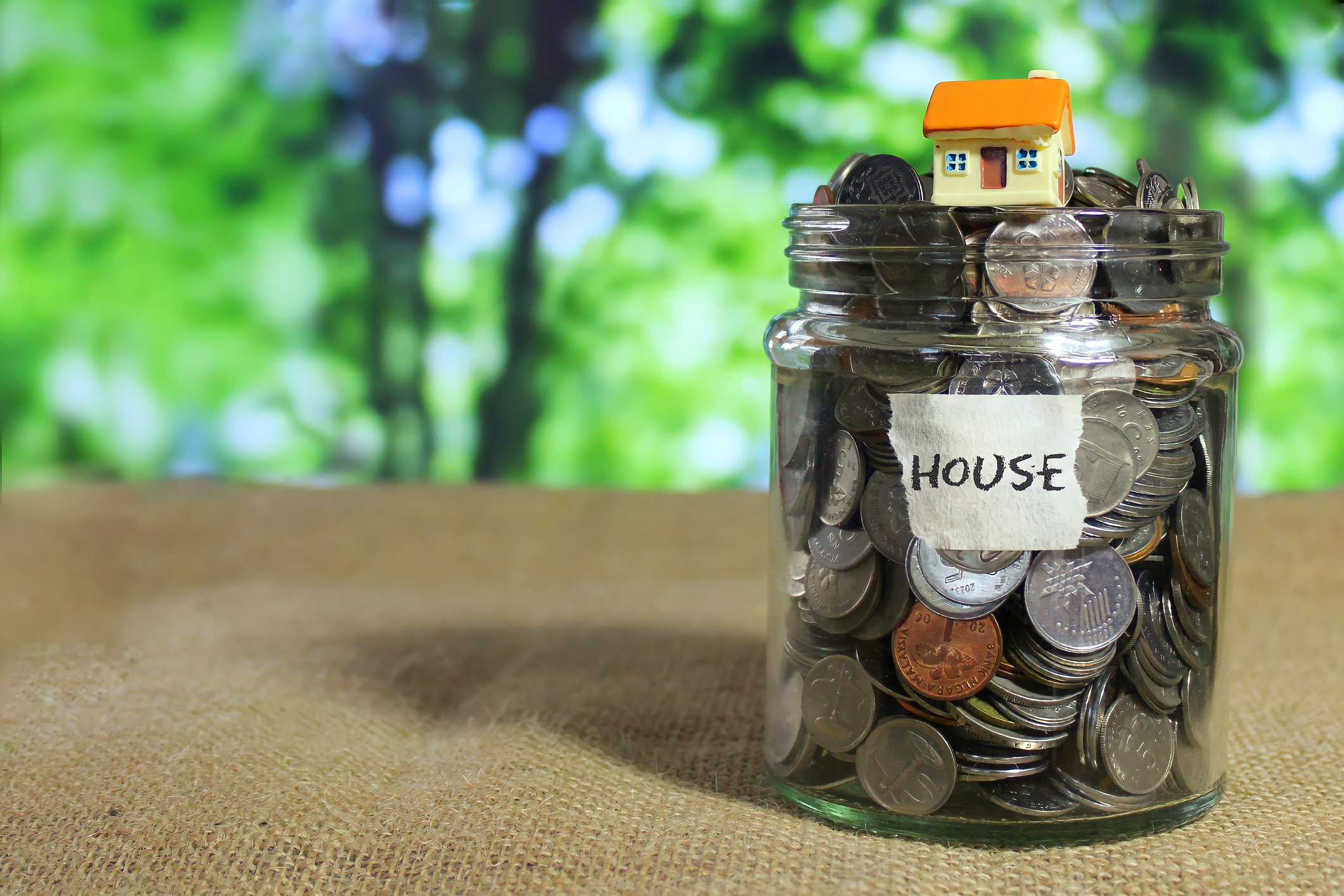
The rate you can save for a down payment heavily depends on how much money you put aside each month, the price of the home you want to save for, and how big of a down payment you want to make.
If you’re buying a small house in the countryside and only paying a 5% down payment, you can save much faster than buying a medium-sized house in the city with a 20% down payment.
Here’s everything you need to know to figure out how long it will take you to save for a house.
The Down Payment Formula
First, you’ll need to determine the average price of the home you want to buy. Once you have a number (even if it’s just an estimate or price range), you need to figure out the percent you want, or are required, to put down.
This percentage will go toward your home loan immediately, so a larger down payment will mean smaller monthly payments—and you won’t have to pay as much in interest over the course of the loan.
20% is often a good benchmark for a down payment, as you can avoid paying private mortgage insurance (PMI) on your monthly payments. If you do a lower down payment, you’ll usually have to pay PMI each month until you pay for 20% of the home loan. This extra payment protects your lender in case you default on your loan.
However, if you’re struggling to raise money for a down payment, you don’t need to let the 20% figure get in the way. For borrowers who can afford monthly mortgage payments with a lower down payment and meet the necessary credit and debt-to-income ratio criteria, there are several loan options available. Conventional loans can be obtained with as little as 3% down, FHA loans with a minimum of 3.5% down, and VA or USDA loans do not require any down payment.
Say the home you want to buy costs $200,000. A down payment of 20% would be $40,000—a lot of money to save. But a down payment of 3% on the same home would be less intimidating at $6,000. If you put aside $400 a month to save for a down payment, it will only take 15 months to save for the 3% down payment, while the 20% down payment would take 100 months—that’s a difference of more than 8 years.
How Much to Save for a Down Payment
Sarah Larbi, a real estate investor and speaker based in Oakville, Ontario, recommends that future buyers save a minimum of 10% of their income each month to help build a down payment fund.
If you are earning $59,055 a year, you would then have $5,905 saved for a down payment after one year. At this rate, if you want to buy a home costing $200,000, it would take you almost seven years to save up enough for a down payment of 20%.
But, if you decide to save up enough for a down payment of 10%, it would take you half the time. And if you only wanted to save 5%? It would take you less than two years to have enough for your down payment at this rate of savings.
You can even speed up the process by saving a larger percentage of your income and aiming for a smaller down payment. But before making any of these decisions, you’ll have to look at your own income, the average prices of homes where you want to live, and how soon you want to buy. Don’t save so much for a down payment that you are struggling to pay your other monthly bills.
Does a Smaller Down Payment Make Sense?
Consider the value of equity. When you make your mortgage payments, you build equity in your home. You’ll build equity, too, if your home rises in value after you buy it. Say you owe $150,000 on your mortgage, and your home is worth $220,000. You now have $70,000 in equity.
You can borrow against this equity with home equity loans or lines of credit, and then use that money for everything from home improvements to paying off high-interest-rate credit card debt.
You also get certain tax benefits when owning a home. You can deduct the interest you pay on your mortgage loan each year on your taxes. You can also deduct the property taxes that you pay. You might even find that the monthly cost of a mortgage is comparable to rent prices, even when including PMI payments.
Larbi says that it might make financial sense to decide to save up for a smaller down payment to get into a home faster. After all, it will take longer to save up enough money for a down payment of 20%. Instead, you might be able to qualify for a mortgage with as little as 3% down. You’ll pay more over the life of your loan in interest rates, but you’ll still be building equity.
Another reason a smaller down payment could make more sense is that your interest rates in the future aren’t guaranteed. Borrowers will often wait during a high-rate housing market, hoping to take advantage of lower interest rates in the future.
However, you can’t rely on the housing market to change one way or the other—waiting for lower interest rates might end up hurting you in the long run, as interest rates could get even higher and stay that way for several years before going back down. You’ll need to weigh your financial options carefully and decide if a mortgage is affordable for you at the current mortgage rate, but if it is, locking in your interest rate may be a smart move.
A popular option for homeowners is to lock in an affordable interest rate so they can refinance later—that way, you have the security of getting an affordable rate now, with the hope that you can get an even lower interest rate in the future without relying on unpredictable rates to buy your home in the first place.