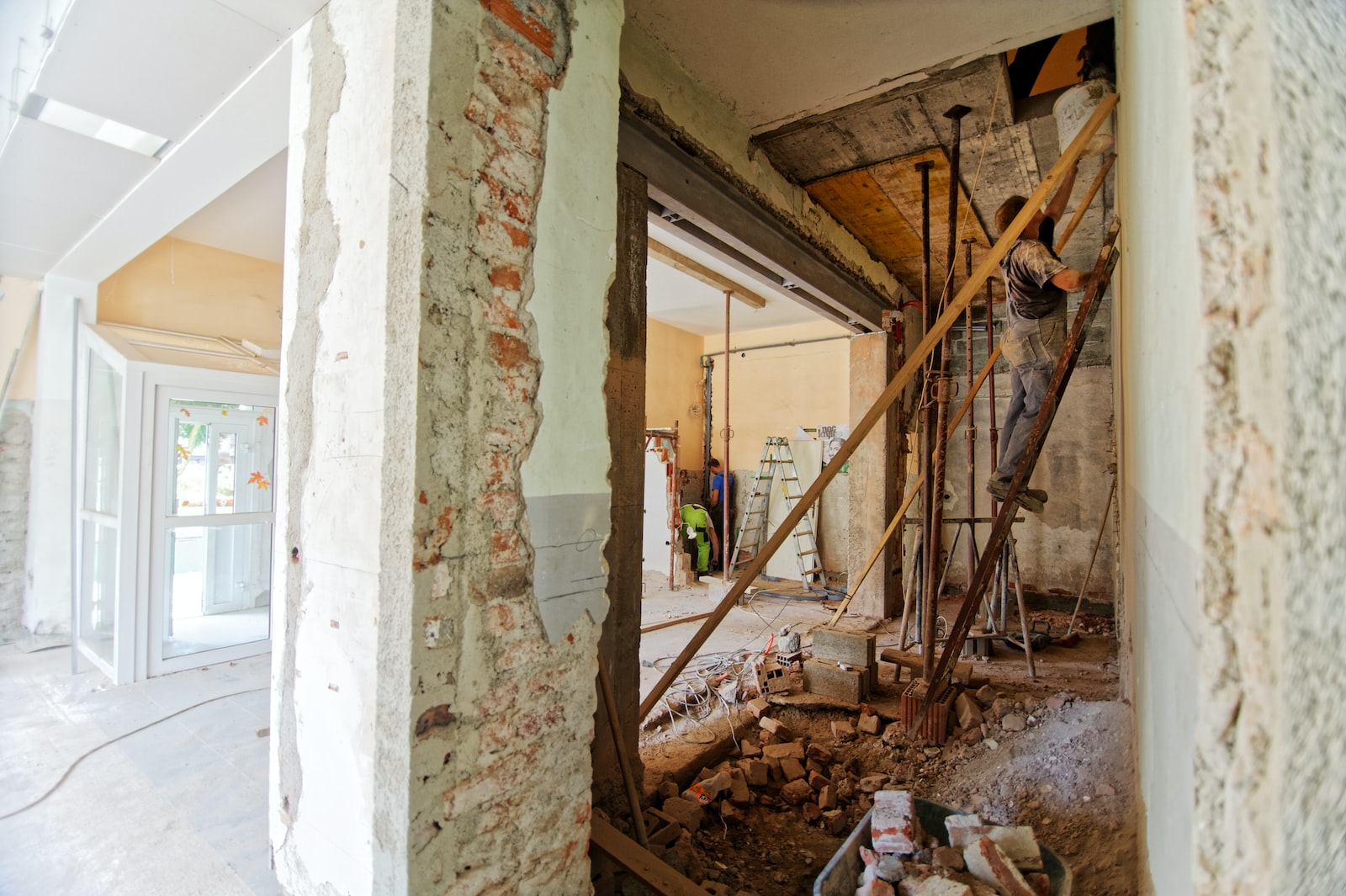
Major renovations can be difficult to finance when most of your wealth is tied up in your home. You may know that a new kitchen, roof, addition, or structural repair could substantially increase your property’s value, but that future value does not help much when you have limited equity today.
A renovation refinance, such as an FHA rehab loan, offers another approach. Instead of determining how much you can borrow based only on what your home is worth now, certain renovation loan programs consider what the property is expected to be worth after the approved improvements are completed.
For homeowners who cannot access enough money through a traditional cash-out refinance, this can open the door to projects that would otherwise be difficult to fund. However, it also means replacing your current mortgage, potentially giving up a favorable interest rate in the process.
Here is how a home renovation refinance works for existing homeowners, how after-improved value can affect borrowing power, and why the rate trade-off deserves careful consideration before you apply. To compare the major renovation financing programs, check out our renovation refinance loan guide.
What Is a Renovation Refinance for Existing Homeowners?
A renovation refinance replaces your current mortgage with a new loan that includes money for approved home improvements. Instead of taking out a separate loan alongside your mortgage, you refinance the existing balance and renovation costs into a single loan.
At closing, your old mortgage is paid off. The money allocated for renovations typically does not come to you as a lump sum you can spend freely. Instead, those funds are placed in an escrow account and released to approved contractors through a series of draws as work is completed and inspected.
This structure is one of the biggest differences between a renovation loan and a standard cash-out refinance.
Three major programs can be used for this type of refinancing. They include the FHA 203(k), Fannie Mae HomeStyle® Renovation, and Freddie Mac CHOICERenovation® programs.
An FHA rehab loan, for example, can combine the existing mortgage payoff and approved renovation expenses into one FHA-insured loan.
Each program has its own property, contractor, appraisal, and project requirements, so the right option depends on the scope of the work and the homeowner’s circumstances.
The After-Improved Value Advantage
The defining feature of renovation financing is that the borrowing power can be based on the home’s projected value after improvements are complete. A conventional cash-out refinance is generally limited by the property’s current appraised value, which can leave homeowners with limited equity unable to fund a major project.
A rehab mortgage can work differently because the lender considers the home’s expected value based on the approved renovation plans. As an example, consider a home worth $280,000 today with a $265,000 mortgage. That leaves only $15,000 in current equity, likely too little to access meaningful funds through a traditional cash-out refinance.
Now, suppose a new roof, kitchen remodel, and bathroom addition are projected to increase the home’s value to $380,000. A renovation loan can consider the after-improved value when determining financing under applicable program rules, potentially allowing the homeowner to fund significantly more of the project.
This is what makes home rehab loans useful for equity-constrained homeowners. The appraisal must still support the projected value, and improvements do not necessarily add value dollar for dollar. However, basing part of the financing on the home’s future value can make substantial renovations possible when current equity alone falls short.
The Cost of Giving Up Your Current Mortgage Rate
A renovation refinance replaces your first mortgage, which can get expensive if you already have a low interest rate. Suppose you owe $265,000 at 3.5% interest and are considering a renovation loan at 7% interest. That higher rate applies not only to the renovation funds, but also to the existing $265,000 balance.
On that portion of the debt alone, moving from 3.5% to 7% represents roughly $650 more per month in interest at the beginning of the loan. Once renovation costs are added, the total loan balance and monthly principal and interest payment will be higher still.
Before pursuing a home renovation refinance, compare the cost of the new mortgage with the financial benefit of the improvements. Consider the new monthly principal and interest payment, additional interest expense, estimated value added by the renovation, and how long you plan to own the home.
A higher rate may make sense if the renovation adds significant value and you plan to stay long-term. If you expect to sell within three to five years and the improvements add only modest value, giving up a low mortgage rate may be harder to justify.
Homeowners with rates below 5% should pay particular attention to this trade-off. A home equity line of credit (HELOC) or home equity loan could preserve the existing first mortgage while financing the improvements. Paying cash or waiting for a more favorable rate environment may also be worth considering.
An FHA rehab loan or another renovation program can solve a financing problem, but access to renovation funds is only part of the equation. The long-term cost of replacing your current mortgage also needs to make financial sense.
When a Renovation Refinance Makes Sense for Existing Homeowners
A renovation refinance can make sense when limited equity or the scope of the project makes simpler financing difficult. It may be especially useful when you do not have enough equity for a traditional cash-out refinance, but the planned improvements are expected to significantly increase the home’s appraised value.
It can also work well for extensive projects involving structural work, major systems, foundations, additions, or other improvements that require more funding and oversight. The rate trade-off may be easier to justify when your current mortgage rate is close to the rate available on a new loan, or you plan to stay in the home long enough for the renovation to offset financing costs.
Some renovation programs also allow eligible non-primary residences, including investment properties, although requirements vary by program.
If you already have substantial equity, a cash-out refinance may be simpler because it does not require contractor approvals, renovation escrow accounts, inspections, or draw schedules. Smaller projects may also be better suited to financing that leaves your first mortgage intact.
Ultimately, the right home rehab loan is not necessarily the one that provides the most funding. The financing should fit the project, your current mortgage, and how long you expect to own the home.
How the Renovation Refinance Process Works for Existing Homeowners
Renovation financing requires more preparation and oversight than a traditional refinance because the lender is approving both the mortgage and the project that will affect the property’s future value.
1. Define the Renovation and Gather Contractor Estimates
Start by determining exactly what work you want completed and getting detailed estimates from qualified contractors.
The lender will need detailed plans, costs, and other project documentation before approving the renovation financing. More extensive projects may also require additional professional oversight depending on the loan program.
For an FHA 203(k) Standard loan, this may include a HUD-approved consultant to help prepare the formal work write-up.
The more accurate the scope is at this stage, the easier it is to establish a realistic budget and projected value.
2. Apply With a Lender That Offers Renovation Financing
Not every mortgage lender offers renovation products, so you will need to find one that works with the program you intend to use.
As part of the approval process, the property is evaluated in its current condition and on the basis of its projected value after the approved improvements. The lender then determines the allowable mortgage amount in accordance with the applicable program requirements.
For homeowners pursuing a 203(k) refinance of an existing home loan, additional FHA requirements apply to the borrower, the property, and the renovation plans.
3. Pay Off the Existing Mortgage at Closing
At closing, the new renovation mortgage replaces your current home loan.
The existing mortgage is paid off in full, and the approved renovation funds are placed into a separate escrow account. You do not receive that portion of the loan as unrestricted cash.
This distinction is important. A renovation refinance is designed to finance an approved project, so the lender maintains control over how and when renovation funds are distributed.
4. Begin the Approved Renovation Work
Once the loan closes, work begins according to the timeline established by the applicable program and lender.
An FHA 203(k) project generally requires work to begin within 30 days of closing. Homeowners using another renovation program should confirm its required start and completion timelines with their lender rather than assuming the same deadlines apply.
Because you already own the home, you may continue living there during much of the work when conditions allow. Major structural projects may require temporary displacement at certain stages; however, living arrangements should be discussed with your contractor before work begins.
5. Contractors Receive Funds Through Draws
Contractors are paid from the renovation escrow as approved work is completed.
Rather than handing over the full renovation budget at the beginning of the project, the lender uses a draw schedule. Inspections verify progress before funds are released.
For a Standard FHA 203(k), the HUD consultant also reviews completed work before draws are approved. Other programs and lenders have their own procedures for documenting progress and releasing funds.
This protects the financing from being fully distributed before the improvements supporting the projected value have actually been completed.
6. Complete the Final Inspection
Once the renovation is finished, a final inspection confirms that the approved work has been completed.
Any unused renovation or contingency funds are handled in accordance with the applicable program requirements, which may include applying the remaining funds toward the mortgage principal.
Expect the overall refinance process to take longer than a standard refinance. A renovation loan may take 45-60 days to close, and complex projects can take longer. Contractor approvals, plans, appraisals, inspections, and additional underwriting requirements all add steps.
Avoid committing to a firm construction start date until your financing and renovation plans have been approved.
Financial Risks to Consider
A rehab mortgage can provide access to financing that would otherwise be unavailable, but the extra moving parts create additional financial and logistical risks.
Denise Supplee, a real estate agent in Doylestown, Pennsylvania, and co-founder of SparkRental, has seen the challenges renovation projects can create. She stated, “It is frustrating and a lot of work at times. It is imperative to have good contractors whom you trust. It does not hurt to do some of the work yourself.”
Even with the right contractor, there are other financial risks to plan for.
The after-improvement appraisal is based on the property’s expected value after the approved work is completed. Renovations do not necessarily increase market value dollar for dollar. Spending $20,000 on a particular improvement does not guarantee that the home will appraise for $20,000 more.
Cost overruns can create another problem. Opening walls or beginning structural work can uncover issues that were not obvious during the initial estimate. Material costs can change, and change orders can push the project beyond the original budget.
Building at least a 10% contingency into your plans can provide some room for unexpected costs.
There is also an operational burden that is easy to overlook. Managing contractors, inspections, draw requests, schedules, and disruptions while continuing to live in the property can make home rehab loans more demanding than ordinary mortgage financing.
Finally, do not lose sight of the rate trade-off. A successful renovation can still be an expensive financing decision if completing it requires giving up an exceptionally favorable first mortgage.
When Cash-Out Refinancing Is the Simpler Path
Renovation financing is most valuable when its special features solve a problem that simpler financing cannot.
If you already have enough equity to fund the improvements through a traditional cash-out refinance, you may not need the added structure of a renovation loan.
With a cash-out refinance, borrowing capacity is based on your home’s current value. There is no renovation escrow, contractor pre-approval, HUD consultant, or draw schedule. You receive the available cash at closing and can generally manage the project and contractors on your own timeline.
For an equity-rich homeowner, that flexibility can make cash-out refinancing a much more straightforward option.
The drawback is that cash-out refinancing cannot rely on the future value created by planned improvements. If your current equity is too limited to generate the cash you need, the after-improvement valuation available through renovation financing may be the factor that makes the project possible.
As a note, Refi.com does not currently offer FHA 203(k), HomeStyle, or CHOICERenovation loans. For homeowners who already have sufficient equity, Refi.com’s cash-out refinance options may provide a simpler way to finance improvements.
Frequently Asked Questions
Renovation financing differs from a typical refinance, particularly once contractor requirements, escrow funds, and inspections are involved. These answers focus on what existing homeowners can expect when refinancing their current mortgage to include renovation funding.
Can I Use a Renovation Loan to Refinance My Existing Mortgage?
Yes. Major renovation loan programs can be used to refinance an existing mortgage. Your current mortgage is paid off at closing, and the new loan includes both the payoff amount and approved renovation financing.
Do I Have to Give Up My Current Mortgage Rate to Use a Renovation Loan?
Yes, a renovation refinance replaces your existing first mortgage, so the new interest rate applies to the refinanced balance and the renovation financing.
This can be a major expense for homeowners with below-market rates. Compare the new principal and interest payment and long-term borrowing costs with your existing mortgage before moving forward.
Can I Live in My Home During a Renovation Refinance?
In many cases, yes. Existing homeowners can generally continue occupying the property while approved work is completed when the home remains habitable.
Major structural renovations may make temporary relocation necessary during certain phases. Discuss the construction schedule and living conditions with your contractor before work begins.
How Long Does a Renovation Refinance Take to Close?
A renovation refinance generally takes longer than a standard refinance, with 45-60 days serving as a reasonable minimum planning window. Complex projects can take longer because of appraisals, contractor approvals, detailed renovation plans, underwriting, and other program-specific requirements.
Leave flexibility in your construction schedule and avoid committing contractors to a firm start date before the loan is approved.
What Happens if Renovation Costs Exceed the Loan Amount?
You are generally responsible for costs that exceed the amount approved for the renovation. Building a contingency of at least 10% above the contractor’s estimate can help cover unexpected repairs, change orders, or price increases.
The way contingency reserves are established and handled varies by renovation program. Any unused funds are generally handled in accordance with the applicable loan requirements rather than paid to you as unrestricted cash.
Is a Home Renovation Refinance Right for You?
A renovation refinance can solve a specific problem for homeowners who need substantial improvements but do not have enough current equity to finance them through a traditional cash-out refinance. Its biggest advantage is the ability to consider the home’s projected value after improvements, rather than relying solely on its current value.
Its biggest potential drawback is just as important. Refinancing means replacing your existing mortgage, and homeowners with low first-mortgage rates could substantially increase their borrowing costs in the process.
Run that math before choosing a program. Compare your existing payment and interest rate with the proposed new mortgage, estimate the value the renovation is expected to add, and consider how long you plan to remain in the home.
If you already have enough equity to cover the project, explore Refi.com’s cash-out refinance options as a potentially simpler financing route. If current equity is the obstacle, talk to a Refi.com representative today to compare programs and determine which approach may fit your project.